

Appearance
Curvature, bezel and reflection
Core's optical response and Studio's beam, masks and Y/I/Q treatment work with Flat presentation too. Curvature and the housing change how that treated picture appears, while preserving its underlying look.
Finish the picture, then present it
The main treatment stages work on a rectilinear image. The terminal presentation maps output coordinates into that completed treatment, evaluates the final tone response, and applies the tube boundary and surrounding housing where enabled.
This keeps reconstruction and later sampling on the same grid. Curvature changes where we view the completed picture; the game's source geometry stays put.
Where the warp minifies fine CRT structure, a single center sample can turn it into bands or beats. The terminal stage averages multiple samples over the warped output-pixel footprint. Earlier optical processing also widens the beam's effective footprint for that warp.
Building the housing
The Binding of Isaac


Resizing these images can introduce row patterns absent from the native captures.
Curved shows the curved picture on its own. Curved + Bezel adds a procedural cabinet, recessed tube-contact lip, bevel and edge-glass treatment.
The housing and picture share an antialiased boundary to avoid duplicate black borders. Material shading gives the cabinet depth before screen-driven Reflection is added.
Reflection is available with Curved + Bezel. It lights the recessed lip and bevel from the picture, leaving the picture itself and the rest of the cabinet alone.
Why Reflection costs more
Mina the Hollower
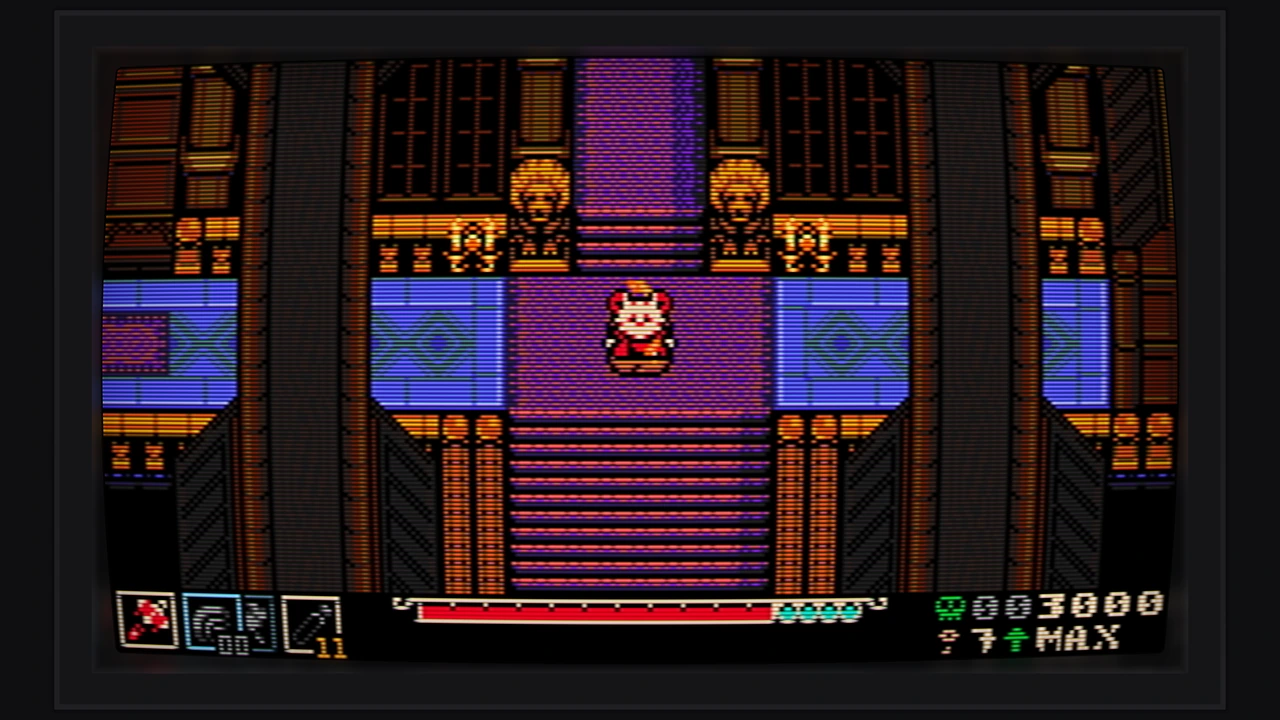
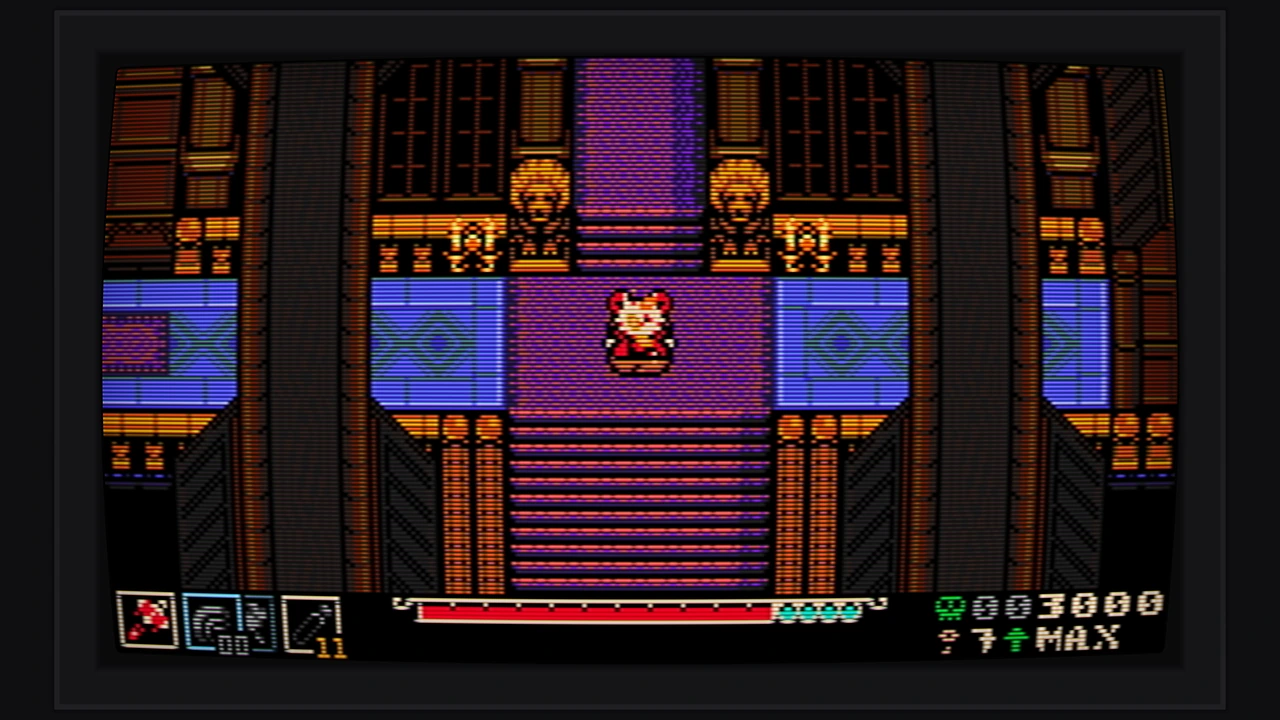
Reflection first renders the visible flat-tube response into another image, using the same tone treatment as the displayed picture. A horizontal/vertical diffuse filter pair removes fine structure; a second, broader horizontal/vertical pair produces ambient spread. The housing samples those responses near its edges.
Those blurred images light the housing while the displayed CRT picture keeps its detail. Reflection adds render-target writes, texture reads and filtering despite lighting a small area of the screen.
Higher output resolutions increase the amount of work. Curved presentation adds sampling and geometry work over Flat, and Reflection adds a further substantial cost in the controlled measurements. Exact differences depend on hardware and rendering path; a frame cap can conceal GPU work rather than eliminate it. The Performance guide gives the measurement conditions and practical settings to try.